License Plate lookup services combine public vehicle records with state registration databases to return owner name, vehicle make, model, year, and registration status in seconds. When a driver types a plate number into a license plate search, the system runs a plate number lookup, checks the registration state, and pulls the plate type, issue date, and expiration details. Users often ask how to look up a license plate, how to verify a license plate number, or how to check if a license plate is active, and each query triggers a vehicle plate lookup that respects privacy rules while delivering the most recent license plate information. If you wonder can you look up a license plate number or can you find a vehicle owner by license plate, the service shows that most license plate records are public, though owner details may be restricted.
License Plate search by number begins with selecting the state of registration, because each jurisdiction uses a unique plate format and classification. After entering the exact plate number, the lookup engine performs a license plate number lookup by state, then returns registration status, expiration date, and any recent transfer or reassignment. The output often shows vehicle make, model, year, body type, and color, answering questions like how to find a vehicle from a license plate or how to check a license plate registration status. While many records are public, owner details may be restricted, so the system flags privacy limits and advises lawful use. If you encounter why can’t I find a license plate record, note that newly issued plates or recent reassignments may delay results, and a license plate records search or license plate lookup online will reflect updates once the state database refreshes.
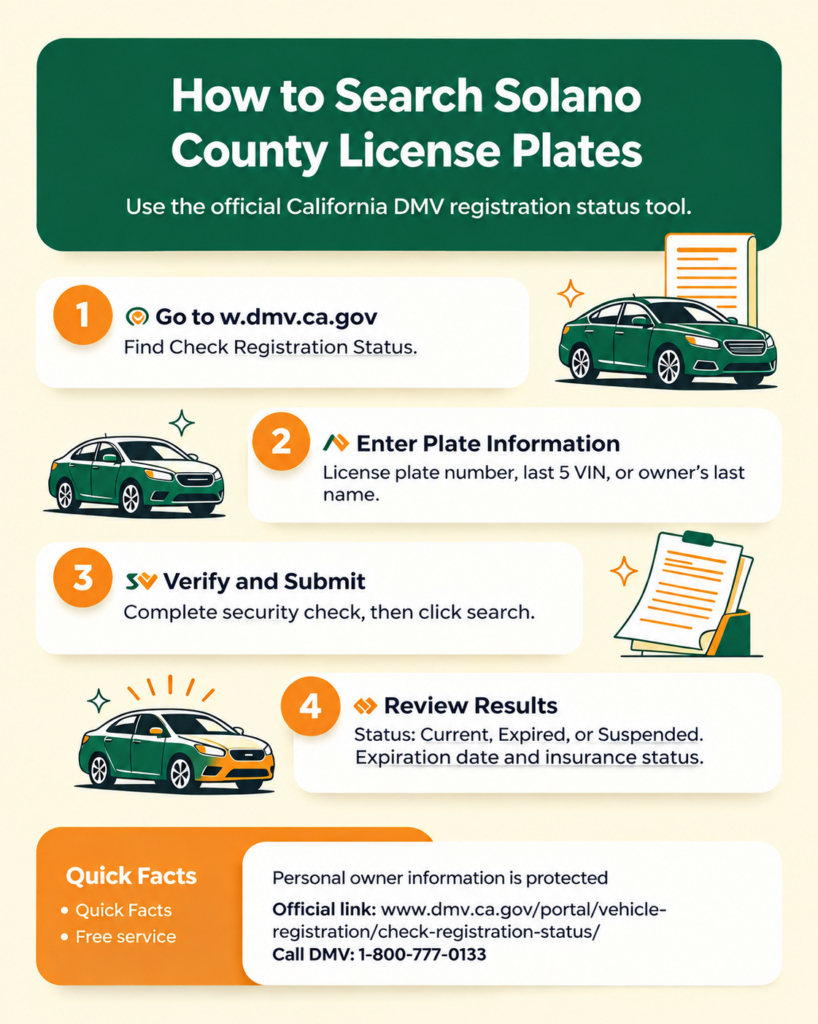
How to Search a License Plate
A license plate lookup helps identify publicly available vehicle information using a plate number and issuing state. Related phone lookup searches may help verify other public information. California restricts access to personal vehicle-owner details, so a public search cannot reveal confidential DMV information without legal authorization.
Official California DMV Vehicle Registration Status: https://www.dmv.ca.gov/portal/vehicle-registration/vehicle-registration-status/
Search by License Plate Number
Enter the exact letters and numbers shown on the license plate. Check the characters carefully, as even one typing error can affect the search.
- Locate the plate on the vehicle.
- Record all letters and numbers in order.
- Include spaces or special characters when required.
- Enter the plate number and review it before submitting.
Select the State of Registration
Select the state that issued the license plate. Each state maintains its own vehicle records, so choosing the correct state helps direct the search to the relevant database. Check the state name printed on the plate if needed.
Search Different Plate Formats
License plates have different formats across states. Some use six characters, while others have seven or more. Standard, personalized, specialty, and temporary plates may also follow different formats. Enter the characters exactly as displayed.
Information Needed for a Plate Lookup
A plate lookup may require the license plate number and registration state. Some official searches also ask for extra details, such as the last five digits of the VIN or the registered owner’s last name. Requirements depend on the state DMV service.
License Plate Search Results
Available search results depend on the state database and its privacy rules. A registration check may show the plate details and current registration status. However, it does not automatically reveal personal owner information.
License Plate Number
The results may display the plate number you entered. Compare it with the physical plate to confirm that the characters match.
Registration State
The registration state identifies the jurisdiction that issued the plate. Check that it matches the state selected before submitting your search.
Plate Type
Some vehicle records identify the plate category, such as passenger, commercial, specialty, or temporary.
| Plate Type | Vehicle Class |
|---|---|
| Passenger | Standard cars |
| Commercial | Trucks and vans |
| Specialty | Charity or college plates |
| Temporary | Temporary vehicle tags |
Vehicle Make and Model
Some authorized vehicle records show the manufacturer’s name and vehicle model. These details can help confirm whether the search result matches the vehicle displaying the plate.
Vehicle Year
Where available, the vehicle year identifies its model year. This detail can help distinguish between different versions of the same vehicle.
Registration Status
An official DMV registration check may show whether a vehicle’s registration is current or expired. The available status details depend on the state’s system.
Publicly Available Vehicle Information
Public vehicle searches may display limited registration or vehicle details. However, owner names, home addresses, and other personal information are protected by privacy laws. Access to another person’s DMV record requires a legally permitted reason and the applicable request procedure.
License Plate Types
States issue different license plate types based on vehicle use, ownership, and registration category. Each type has its own design and eligibility rules. Identifying the plate type helps determine whether a vehicle is registered for personal, commercial, government, or special use.
Standard Passenger Plates
Standard passenger plates are the most common type and are issued for personal cars, SUVs, and other regular vehicles. They display the state name or design along with a combination of letters and numbers assigned by the DMV. Most privately owned vehicles use this plate category.
Commercial Plates
Commercial plates are issued for vehicles used by businesses, such as trucks, vans, and delivery vehicles. Their registration may depend on the vehicle’s weight, size, and intended use. Some states also assign different commercial classifications and fees based on these details.
Specialty Plates
Specialty plates feature unique designs that support universities, charities, military groups, or other organizations. Drivers may pay an extra registration fee to receive these plates. Depending on the state program, part of the additional fee may support the organization or cause displayed on the plate.
Personalized Plates
Personalized plates display custom letters, numbers, or words selected by the vehicle owner. The requested combination must meet state DMV rules and receive approval before issuance. These plates often require an extra fee and can be searched using the exact characters displayed.
Temporary Plates
Temporary plates are issued when a vehicle is purchased or permanent registration is still being completed. Dealerships commonly place these paper tags on newly purchased vehicles. Each temporary plate has a limited validity period and an expiration date that determines how long it can be used.
Disabled Parking Plates
Disabled parking plates are issued to drivers or vehicle owners who meet their state’s eligibility requirements. They usually display a wheelchair symbol and grant access to designated accessible parking spaces. Some states issue permanent plates, while others have separate rules for temporary permits and registration.
Government and Official Plates
Government and official plates are assigned to vehicles used by public agencies, police departments, and other government offices. These plates may display special wording, colors, or formats that distinguish them from standard passenger tags. Registration requirements and fee exemptions depend on the state and the agency operating the vehicle.
License Plate Registration Information
Vehicle registration records show whether a license plate is currently registered and when its registration expires. Depending on the state DMV system, available details may also include the plate issue date and vehicle classification. These records help check registration status and identify upcoming renewal requirements.
Registration Status
Registration status indicates whether a vehicle’s registration is active, expired, suspended, or pending, depending on the state’s reporting system. An active status generally means the registration is current. An expired status indicates that renewal may be required before the vehicle can legally be driven.
Registration Expiration
The registration expiration date shows when the vehicle’s current registration period ends. Owners must complete the renewal requirements before this date to keep their registration current. Depending on the state, renewal may require payment of fees, emissions testing, or other checks.
Registration Classification
Registration classification identifies the category assigned to a vehicle, such as passenger, commercial, motorcycle, or another state-defined class. This classification helps determine the applicable registration requirements and fees. Commercial vehicles may have additional rules based on their weight and intended use.
Plate Issue Information
Plate issue information shows when a license plate was originally assigned or issued by the state, when that detail is available. It can help distinguish newly issued plates from older registrations. The issue date may also be useful when reviewing a vehicle’s registration history.
Registration Record Updates
State DMV databases update registration records after renewals, vehicle sales, plate replacements, and registration transfers. However, updates may not appear immediately across every search system. Recent changes can take time to reach public records, so the official DMV remains the best source for checking the latest registration status.
License Plate and Vehicle Information
A license plate search may connect a plate number with available vehicle registration details. Depending on the state database, results may include the vehicle make, model, year, body type, and registration status. These details can help verify whether a vehicle matches its recorded information.
Some records may also include the VIN and registered vehicle color. However, access to these details varies by state, and personal owner information remains protected by privacy laws.
Vehicle Make
The vehicle make identifies its manufacturer, such as Ford, Honda, or Toyota. This information helps confirm whether the license plate is associated with the correct vehicle. You can compare the recorded make with the car displaying the plate.
Vehicle Model
The model identifies the specific vehicle name, such as Civic, F-150, or Camry. This detail helps distinguish between vehicles made by the same manufacturer. It can also help buyers research vehicle specifications, replacement parts, and market value.
Vehicle Year
The vehicle year refers to the model year, not the year the car was purchased. It helps identify the vehicle’s age and generation. Buyers can use this information when checking vehicle specifications or comparing a car with its registration details.
Vehicle Body Type
Body type describes the vehicle’s general design, such as sedan, SUV, pickup truck, or van. This detail helps distinguish between different vehicle categories. Comparing the recorded body type with the actual vehicle can also help identify possible plate mismatches.
Vehicle Color Information
Some vehicle records include the primary color registered with the DMV. This information can help distinguish a vehicle from others with similar makes and models. However, the recorded color may not reflect recent paint changes or modifications.
Vehicle Registration Details
Registration details may show the current status, expiration date, and vehicle classification. These facts help determine whether the registration is current and whether the plate matches the vehicle category. Available information depends on the state’s DMV search service.
Vehicle Identification References
The Vehicle Identification Number (VIN) is a unique 17-character code assigned to a vehicle. Some authorized records connect the VIN with its license plate. You can use the VIN for a separate vehicle history search to review available accident, title, and ownership history.
License Plate Search by State
Each state maintains its own vehicle registration records and plate requirements. A license plate lookup by state helps direct the search to the jurisdiction that issued the plate. Selecting the correct state is important because plate formats, registration rules, and public record access differ.
State Registration Lookup
A state registration lookup checks vehicle information through the issuing state’s DMV service. Select the state and enter the required plate details. Some official services may also request additional information, such as part of the VIN or the registered owner’s last name.
Out-of-State Plates
When a vehicle displays an out-of-state plate, select the state that originally issued it. For example, a Florida plate should be checked through Florida’s relevant registration service, even if the vehicle is currently in Texas. The location of the vehicle does not change its issuing state.
State-Specific Plate Formats
License plate formats vary between states. Some use six characters, while others use seven or different combinations of letters and numbers. Enter the plate exactly as displayed and follow the format requirements of the selected state’s search service.
Temporary Registration Plates
Temporary registration plates are commonly issued by dealerships while permanent registration is pending. These paper tags display a temporary number and expiration date. Their validity must be checked through the relevant state or authorized registration service, as not every public lookup includes temporary tags.
Transferred Registration
Registration transfers occur when a vehicle is sold or its registration is reassigned under state rules. The DMV updates the record after processing the transfer. Recent changes may take time to appear, so the official state record is the best source for confirmation.
Expired State Registrations
An expired registration means the vehicle’s registration period has ended without a completed renewal. Some DMV searches display the expiration date or current registration status. Buyers and vehicle owners can check these details before completing a sale or renewal.
License Plate History
License plate history may include earlier registration details, plate assignments, and changes recorded by the state. Access to historical information varies by jurisdiction. Some records are restricted and may require a formal request or an eligible legal purpose.
Previous Registration Information
Previous registration information may show earlier registration periods, expiration dates, and vehicle classifications. These details can help establish a vehicle’s available registration timeline. However, not every state makes historical records available through public searches.
Plate Assignment History
Plate assignment history tracks changes in the vehicle associated with a plate number. Some states let owners transfer eligible plates between vehicles, while others issue new plates. Available assignment records depend on the state’s retention and disclosure rules.
Registration Changes
Registration records may change after an owner updates vehicle information, renews registration, or reports a change such as a new vehicle color. The DMV records these updates according to state requirements. Recent changes may not appear immediately in every search system.
Plate Transfers
A plate transfer occurs when an eligible plate is reassigned to another vehicle or owner. The DMV records the change after processing the required paperwork. Transfer dates and related details may be available through official records or a formal request.
Reissued License Plates
States may reissue plate numbers under their own registration rules. When a number is assigned again, the current record may relate to a different vehicle than an older record. Historical details may be limited, so verify the current assignment through the issuing DMV.
Historical Plate Information
Historical plate information can help researchers and vehicle buyers review older registration details, issue dates, and plate formats. Classic car owners may also use available records to support vehicle research. Related whitepages searches may help locate other public information, but they do not replace official vehicle records.
License Plate and Public Records
Vehicle records are public. The government keeps these records. You can search many of them. A license plate lookup uses public vehicle records. The law allows the public to see car facts. This promotes safety and transparency.
The public records include car details. They include registration status. They do not include personal owner facts. The Driver’s Privacy Protection Act draws a line. You get the car facts. You do not get the driver facts.
Publicly Available Registration Information
Public registration records include car details. You see make, model, and year. You see plate type and status. The law allows the public to see this data. This data is not secret. Anyone can search it online.
The public access helps buyers. It helps police. It helps insurance companies. The search system provides this public data. It is fast and easy. You do not need special permission to see these facts.
Government Vehicle Records
State DMVs manage government vehicle records. They store all registration data. A license plate records search pulls from these official databases. The facts are reliable. The government guarantees the data accuracy.
The DMV updates the records daily. The search system connects to the DMV. It gives you the exact same facts the DMV has. You can trust these facts. They are official government records. They are not guesses.
Restricted Vehicle Information
Some vehicle details are restricted. Owner names are restricted. Home addresses are restricted. The Driver’s Privacy Protection Act (DPPA) limits access to these facts. The search system blocks these facts. You cannot see them.
The restrictions stop stalking. They stop harassment. They stop identity theft. The search tool respects the law. It only shows public car facts. It hides private human facts. This keeps drivers safe.
Confidential Information
Confidential details stay hidden. Police and DMV workers can see them. The public cannot see them. A lawful license plate lookup respects these limits. The confidential facts include social security numbers. They include medical details.
The search system never shows confidential facts. It filters them out. You only see the public car record. The confidential data is locked away. Only legal authorities can unlock it. This protects citizen privacy.
Records Available by Request
You can request some restricted records. You need a valid reason. You submit a formal vehicle records request. The state reviews your request. Private investigators can request owner names. Insurers can request them too.
The request process is strict. You must fill out state forms. You must prove your legal reason. The state charges a fee. If you get approval, the state mails you the facts. The public search tool cannot do this. You must go to the DMV.
License Plate Lookup Accuracy and Limitations
Search accuracy depends on the data. State databases have delays. Errors happen. You must understand the limits of a license plate search. The system is very good, but it is not perfect. Sometimes facts lag behind reality.
You can improve accuracy. You can type the plate perfectly. You can pick the right state. You can understand the limitations. This helps you read the results correctly. It stops you from making wrong assumptions.
Matching the Correct Plate Number
Accuracy requires the exact plate number. One wrong letter ruins the search. You must match the correct plate number. Double-check your typing before you search. The system needs a perfect character match.
Some letters look like numbers. The letter O looks like zero. The letter I looks like one. You must be careful. The search system treats them differently. A wrong character gives you a wrong car. You must verify your input.
Confirming the Registration State
You must confirm the registration state. Searching the wrong state gives no results. A license plate lookup by state only works if you pick the right state. The system checks one state at a time. It does not search all states at once.
If you get zero results, check the state. You might have picked the wrong one. Look at the plate design again. Read the state name. Select that exact state. Run the search again. This usually fixes the problem.
Recently Issued Plates
Recently issued plates may not appear online. The state needs time to update the database. A new plate might cause a “plate number not found” error. Wait a few days. The DMV processes new plates in batches.
If a dealer gave you a new plate yesterday, it might not be online yet. The search system only sees uploaded data. The state uploads data every week. You must wait for the upload. Then the search will work.
Expired or Reassigned Plates
Expired plates show old data. Reassigned plates show new data. The system shows the current status. A plate number search online reflects these changes. An expired plate still shows up. It just shows an expired status.
Reassigned plates show the new car. The old car record is closed. The search system finds the active record. It shows the current car linked to the plate. This prevents confusion. You see the current legal status.
Outdated Registration Information
Outdated registration details cause errors. The state database might lag. A recent sale might not show up yet. The search might show the old owner. The DMV takes weeks to process sales. The online data reflects this delay.
You must understand this limit. If you buy a car today, the search might show the old owner tomorrow. The data is not real-time. It is close to real-time. The delay is usually short. The facts update quickly.
Limitations of License Plate Searches
Searches have limits. You cannot find owner names. You cannot find addresses. The system only shows public vehicle records. Privacy laws block personal details. You cannot use the search to find a person.
The search is a car tool, not a people tool. It gives you car facts. It protects driver privacy. You must respect these limits. The system is perfect for verifying cars. It is useless for stalking people. The law enforces this boundary.
License Plate Lookup Problems
Searches sometimes fail. You might get errors. These problems have simple causes. You can fix most issues easily. You just need to know what went wrong. Most errors link to typos or database delays.
Do not panic if you see an error. Read the error message. Check your input. Try the search again. If it still fails, the plate might be too new. The state might restrict the data. You can solve the problem step by step.
Plate Number Not Found
A “plate number not found” error means no match exists. You might have typed the wrong number. The plate might be too new. The state might not have it online. Check your typing first. Look for transposed letters.
If your typing is perfect, the plate might be new. Wait a week and try again. The state might have a database issue. You can try again later. This error is common for brand new cars. It is not a system failure.
Incorrect Plate Format
An incorrect plate format stops the search. You must use the right spaces and dashes. States use specific formats. Fix the format and search again. The system rejects formats that do not match the state rules.
Look at the plate carefully. Count the characters. See if there are spaces. Type them exactly. The search tool validates the format. It stops wrong formats. This prevents bad searches. It saves time.
Wrong Registration State
A wrong registration state gives zero results. You must search the state on the plate. A New York plate needs a New York search. Select the right state. The system only checks the state you choose.
If you pick Texas for a Florida plate, you get zero results. The Texas DMV does not have the Florida record. Change the state dropdown to Florida. Run the search again. This fixes the error immediately.
Recently Issued Plate
A recently issued plate causes search problems. The DMV database takes time to update. New plates might not show up for a week. Try again later. The state processes new plates in batches.
Dealers issue many plates. The state uploads them slowly. The search system only sees uploaded data. If the plate is two days old, it is likely not online yet. You must wait. The data will appear soon.
Reassigned Plate Number
A reassigned plate number might confuse you. The plate moved to a new car. The search shows the new car. The old car record is closed. The state recycled the plate number. This happens after many years.
You might expect to see an old car. You see a new car instead. This is not an error. The state gave the number to a new car. The search results show the current active record. This is the correct behavior.
Restricted or Unavailable Records
Restricted or unavailable records block your search. Some states hide all plate data. You might need a formal records request. The public search tool cannot see these records. The state law blocks public access.
Some states have strict privacy laws. They do not allow public plate searches. If you search a plate in that state, you get nothing. You must submit a formal request to the DMV. You must prove a legal reason. The public tool cannot bypass state law.
License Plate Privacy and Legal Restrictions
Privacy laws protect drivers. The DPPA controls motor vehicle records. A license plate lookup must follow these laws. You can only see public facts. The law draws a strict line between car facts and driver facts.
The Driver’s Privacy Protection Act is a federal law. It applies to all states. It stops DMVs from releasing personal facts. It stops search tools from showing personal facts. You must obey this law. Violations carry heavy fines.
Public License Plate Information
Public license plate details are legal to see. You can view vehicle make and model. You can view registration status. The law allows this access. These facts do not violate privacy. They only describe the car.
The public facts help keep roads safe. They help buyers verify cars. They help police track stolen cars. The search system provides these facts freely. You do not break the law by viewing them. You act within your rights.
Restricted Owner Information
Restricted owner details stay private. You cannot see the registered owner name. You cannot see their address. This protects driver privacy. The DPPA locks these facts away. The search system never shows them.
You cannot find out who drives a car. You cannot find where they live. The law stops this. The search tool filters out owner names. It filters out addresses. It only shows the car. This stops stalking and harassment.
Personal Information Limitations
Personal details have strict limits. The DPPA blocks access to names and addresses. A license plate lookup online hides these facts. This prevents stalking and fraud. The limitations are absolute. The public cannot bypass them.
The law defines personal facts clearly. It includes phone numbers. It includes social security numbers. It includes medical details. The search tool blocks all of them. You only get car facts. The personal limits keep people safe.
Driver Privacy Protections
Driver privacy protections are federal law. The DPPA guards personal vehicle details. States must follow this law. Violations carry heavy fines. The protections are strong. They apply to every state DMV.
The law punishes anyone who sells personal DMV data. It punishes anyone who uses the data illegally. The search system respects these protections. It does not store personal data. It does not share personal data. It obeys the federal law.
Lawful Use of Registration Information
Lawful use of registration details matters. You can use public records for safety checks. You can use them for vehicle verification. You cannot use them to harass people. You cannot use them for illegal purposes.
If you use the search tool, you must obey the law. You can verify a car before you buy it. You can check a car that hit you. You cannot track your neighbor. You cannot stalk a stranger. The law limits your use of the facts.
Formal Record Requests
Formal record requests unlock restricted details. You need a permitted reason. Private investigators and insurers can request them. You must fill out state forms. The state reviews your reason. They approve or deny the request.
The request process is formal. You mail a paper form to the DMV. You pay a fee. You wait weeks. The DMV checks your legal reason. If you have a valid reason, they mail you the facts. The online search tool cannot do this. You must use the official state process.
License Plate Lookup and Related Searches
A license plate lookup is one type of vehicle search. Other searches use different data. They return different facts. You should know the differences. Each tool has a specific purpose. You should pick the right tool for your needs.
Some tools use the VIN. Some use the title number. Some search people. The plate lookup is the easiest tool. You just need the plate number. The other tools require more facts. You should understand what each tool does.
License Plate Lookup vs. VIN Lookup
A VIN lookup uses the 17-digit car code. A license plate lookup uses the state tag. Both return vehicle details. A VIN lookup gives more history facts. The VIN stays with the car forever. The plate can change.
You use a plate lookup to find a car on the road. You use a VIN lookup to research a car you want to buy. The VIN lookup shows accident history. The plate lookup shows registration status. They are different tools for different jobs.
License Plate Lookup vs. Vehicle Records
Vehicle records include all car documents. A license plate lookup only checks the plate. Vehicle records include titles and liens. The plate search is faster. It gives you a quick snapshot. The full vehicle records are deeper.
You use the plate search for quick checks. You use full vehicle records for legal sales. The plate search tells you if the car is active. The full records tell you who owns the car legally. They tell you if a bank holds a lien.
License Plate Lookup vs. Registration Search
A registration search checks the car’s legal status. A license plate lookup does this too. They are very similar. The plate search uses the tag number. The registration search might use the title number. They both check DMV status.
The tools overlap. The plate search is the most common type of registration search. You type the plate to find the registration status. The results are the same. The plate lookup is just the easiest way to start a registration search.
License Plate Lookup vs. Vehicle History
A vehicle history report shows past accidents. It shows damage and service records. A license plate lookup only shows registration data. It does not show accidents. It does not show oil changes. The history report is much deeper.
You use the plate lookup to verify current tags. You use the history report to check car quality. The history report costs money. The plate lookup is often free. They serve different buyers. The history report protects your wallet.
License Plate Lookup vs. People Search
A people search finds human details. It finds names and addresses. A license plate lookup finds car details. You cannot use a plate search to find a person. The law blocks owner names. The tools are completely different.
A people search uses a name to find an address. A plate search uses a tag to find a car make. You cannot cross them. You cannot turn a plate into a name. The DPPA stops this. The plate lookup is a car tool, not a people finder.
License Plate Lookup vs. Public Records
Public records include many government files. They include court and property records. A license plate lookup only checks vehicle records. It is a specific public record search. The public records search is much broader.
You use the plate lookup for cars. You use public records for houses or court cases. The plate lookup is a small slice of the public records world. It is highly specialized. It only connects to the DMV database. It gives you fast, targeted car facts.
Contact Details
- Official State DMV Contact Example
- California Department of Motor Vehicles
- Address: 2415 First Avenue, Sacramento, CA 95818
- Phone: 1-800-777-0133
- Website: https://www.dmv.ca.gov
- Hours: Monday to Friday, 8:00 AM to 5:00 PM
Frequently Asked Questions
A license plate lookup helps you confirm vehicle details quickly. It lets you see make, model, year, and registration status. Drivers use it to avoid scams, buyers check before purchase, and agencies verify compliance. The service respects privacy rules and works for every state that shares public registration data. Knowing how to run a search saves time and reduces guesswork.
How does a license plate lookup work?
First, write down the exact plate characters and the state that issued it. Next, open an official DMV portal or a trusted lookup site. Then, type the plate number into the search box. The system checks the state’s registration database. It returns the vehicle’s make, model, year, VIN, and whether the tag is active. Finally, review the status and any expiration date. The steps work the same in all 50 states, though some sites may require a brief user account.
Can I search a license plate number online for free?
You can start a free search on most state DMV websites. They usually let you enter a plate number and see basic details such as vehicle type and registration status. If you need more fields, a paid third‑party service may be required. Free sites respect privacy limits, so owner name and address stay hidden. Since public records vary, results differ from state to state. Try the official portal first before looking at paid options.
What information appears in a license plate records search?
A license plate records search can show many data points. You may see plate type, issue date, expiration date, and status (active or expired). Vehicle information includes make, model, model year, body style, and color. Some reports list the VIN and the registration county. Owner details such as name or mailing address are hidden unless you have a legal reason. The depth of data depends on the state’s public‑record rules.
How can I verify if a plate is active in my state?
To verify if a plate is active, go to your state’s DMV online portal. First, select the “plate status” or “registration check” option. Next, enter the full plate number and the state code. Then, press submit. The page will display the current status, the expiration month, and any holds on the registration. If the result shows “inactive,” you can view the reason, such as unpaid fees or a suspension. This check works for standard, commercial, and specialty plates.
Why might a license plate lookup return no results?
A lookup may return no result for several reasons. First, the plate number could be typed incorrectly. Next, you might have chosen the wrong state, and the database will not match the entry. Then, the plate might be brand new, and the state has not uploaded the record yet. Finally, privacy rules may block public access to owner details for certain plate types. Double‑check the characters and state, wait a few days for new plates, or contact the DMV for help.